This chapter concludes the discussion of humanistic and person-centered approaches to psychotherapy. Like the approaches covered in the previous chapters, the therapies presented here emphasize the individual's capacity for growth and self-understanding. Although they share a common humanistic foundation, each takes a different path. Some focus on emotions, others on bodily awareness, interpersonal relationships, or personal motivation. Together, they offer different ways of helping people better understand themselves and move toward meaningful, lasting change.
Emotion-Focused Therapy (EFT)
Emotions are essential for survival, communication, and problem solving (Greenberg, 2015, p. 14). They provide information about both our internal experiences and the external environment, helping us recognize danger, establish personal boundaries, adapt to changing situations, and evaluate whether our experiences are consistent with our needs and values. Emotions also play an important role in social learning by shaping how we relate to and communicate with others.
People often describe emotions as either "good" or "bad," yet every emotion serves an adaptive function. Anger may signal that a personal boundary has been violated and motivate assertive action, whereas feeling hurt can indicate unmet emotional needs or damage to one's self-esteem, encouraging reflection and the pursuit of healthier relationships (Cornelius et al., 2007, pp. 82). Similarly, fear promotes caution in the presence of danger, while guilt may reflect empathy, responsibility, or the need to repair harm caused to others.
Although emotions are naturally adaptive, they are not always experienced or expressed in ways that promote well-being. Past experiences, trauma, and learned patterns of responding can distort emotional reactions, leaving individuals overwhelmed, disconnected from their feelings, or guided by emotions that are no longer helpful. These observations have led to the development of therapeutic approaches that place emotional experience at the center of psychological change. One of the most influential of these is Emotion-Focused Therapy (EFT), developed by Leslie Greenberg, which views emotions not as obstacles to overcome but as valuable sources of information and the primary drivers of therapeutic change.
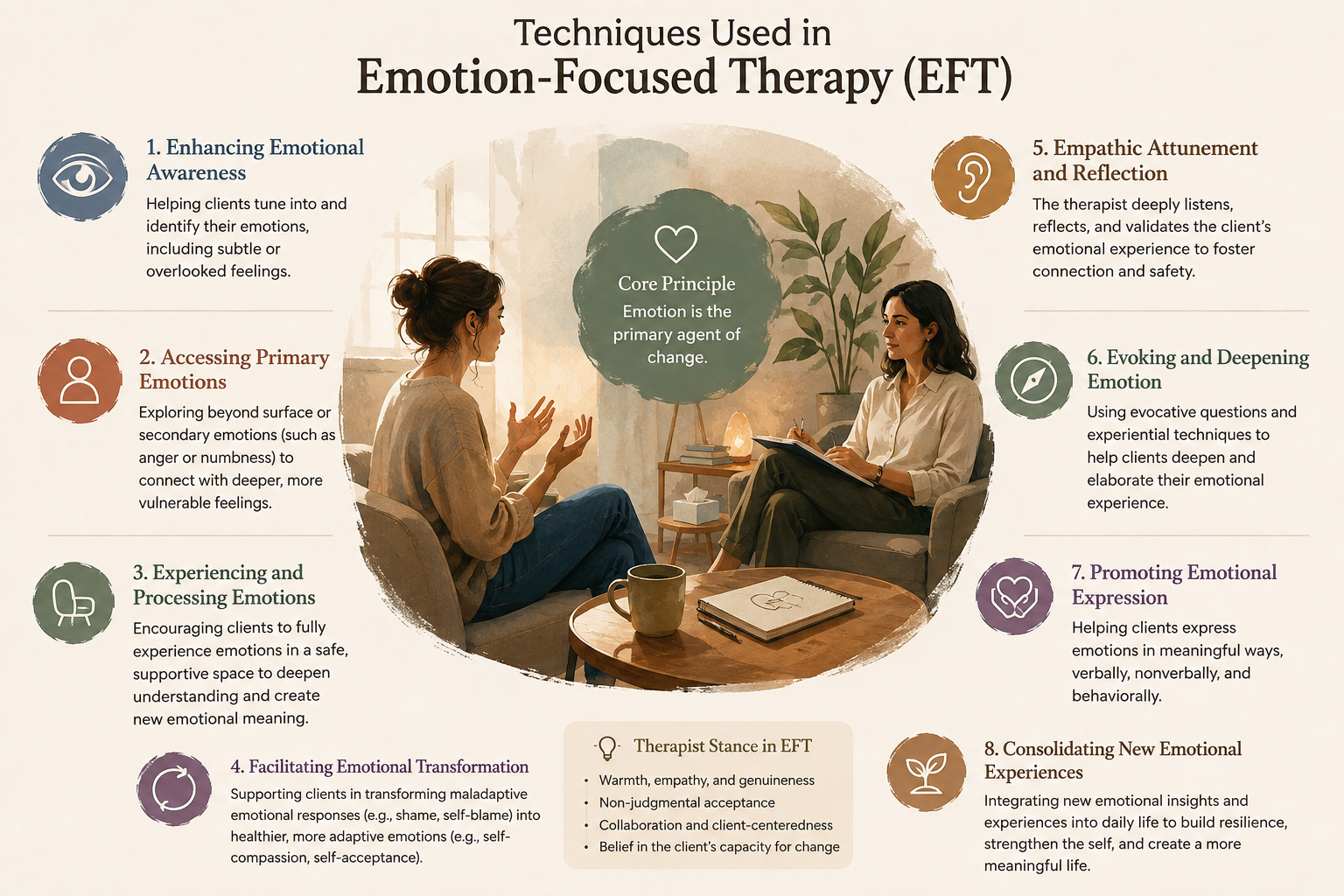
Emotion-Focused Therapy (EFT) is considered a neo-humanistic approach to psychotherapy that emphasizes the awareness, regulation, expression, and transformation of emotions within the therapeutic relationship to strengthen the self and foster meaning in one's life (Greenberg & Goldman, 2007, p. 379). Drawing on the principles of Carl Rogers' person-centered therapy, as well as experiential and Gestalt traditions, EFT maintains a collaborative, client-led therapeutic process while viewing emotion as the primary mechanism of psychological change (Elliott & Greenberg, 2007, p. 212). Rather than attempting to suppress or simply regulate emotions, EFT helps clients explore and transform emotional experiences so they can respond to themselves and their environment in healthier and more adaptive ways.
Focusing-Oriented Therapy
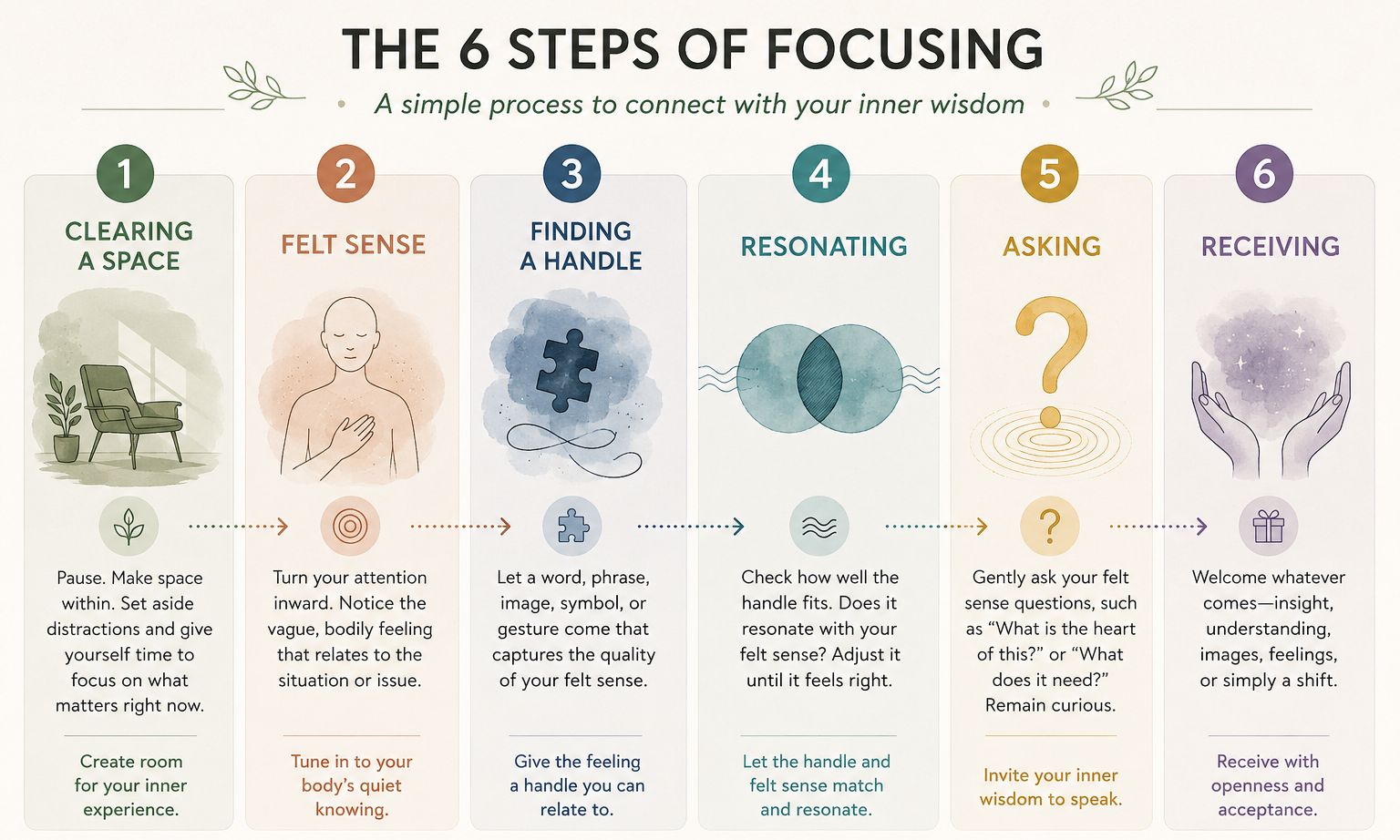
Focusing-Oriented Therapy (FOT) was developed by philosopher and psychologist Eugene T. Gendlin, a student and later research collaborator of Carl Rogers at the University of Chicago (Gendlin, 1978, pp. 1–5). While analyzing psychotherapy sessions with Rogers, Gendlin observed that clients who improved most consistently paused, turned their attention inward, and searched for a vague bodily awareness before finding words to describe their experiences. He called this embodied knowing the felt sense, which became the foundation of Focusing-Oriented Therapy (Gendlin, 1978, pp. 25).
The concept of experiencing emerged from the work of Carl Rogers and was later developed extensively by Eugene Gendlin into a central component of FOT. Rather than referring simply to having an experience, experiencing describes the process of attending to one's immediate, bodily felt awareness in an open and non-judgmental manner. Within FOT, clients learn to recognize these subtle bodily sensations, describe them as accurately as possible, and explore the words, images, memories, or gestures that naturally arise from them. Through this process, previously unclear experiences gradually become more meaningful and understandable. The therapist's role is not to interpret these experiences but to facilitate exploration by providing a safe, accepting environment, encouraging curiosity, and helping clients remain engaged with the felt sense at a pace that is comfortable for the individual (Hendricks, 2002, pp. 3–4).
Transactional Analysis (TA)
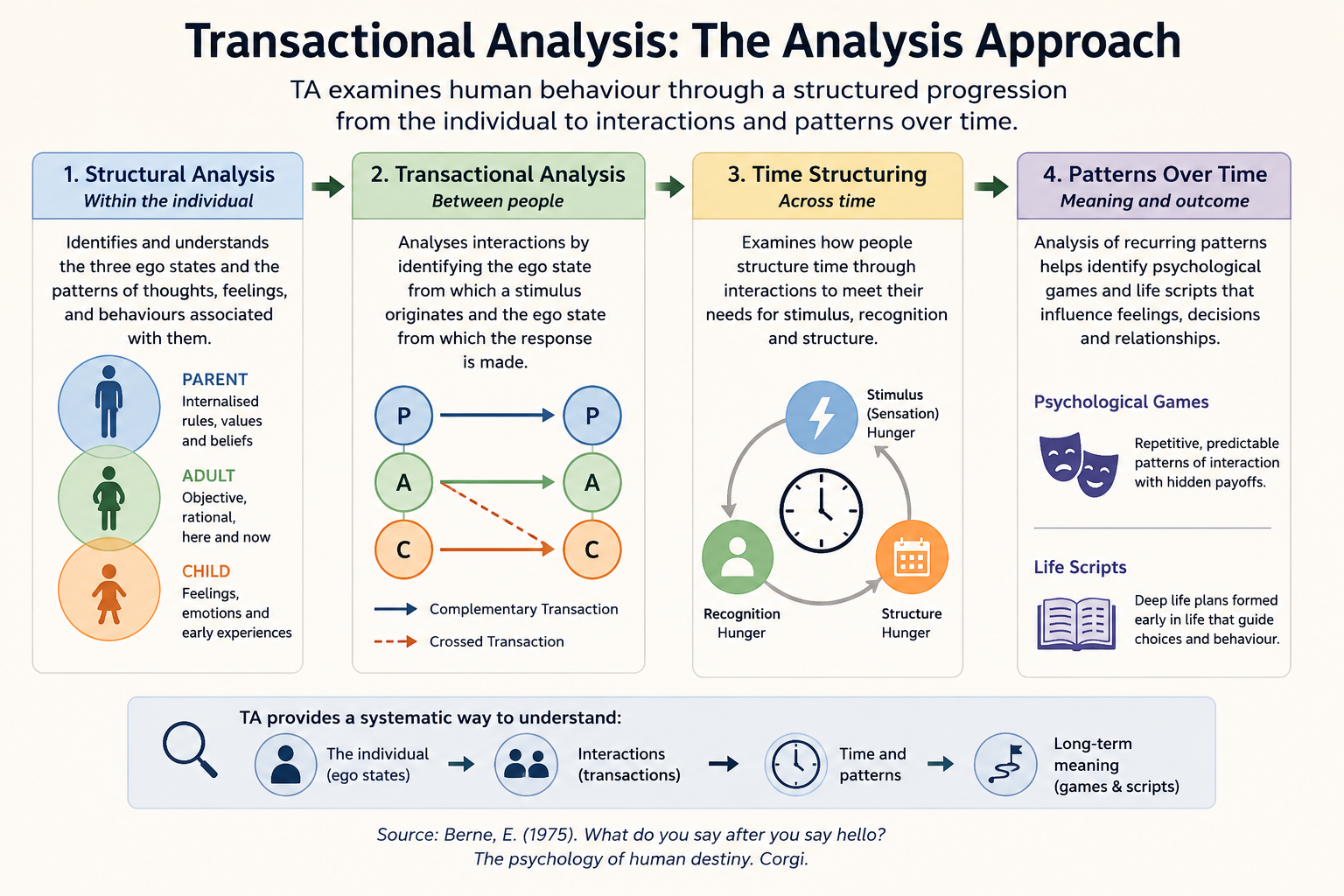
Transactional Analysis (TA), developed by psychiatrist Eric Berne, is a theory of personality, social interaction, and psychotherapy that examines how patterns of thinking, feeling, and behavior influence interpersonal relationships. TA proposes that individuals operate through three ego states—Parent, Adult, and Child—and that interactions between people can be understood by examining which ego states are involved in a particular exchange. Through the analysis of these interactions and the recurring patterns that develop over time, TA aims to increase self-awareness, improve communication, and help individuals modify unhelpful interpersonal patterns (Berne, 1975, pp. 30–41).
As Berne states, there are three ego states, each representing a coherent system of thoughts, feelings, and corresponding patterns of behavior:
- The Parent (P) refers to patterns derived from parental figures and may be described as Nurturing (e.g., providing help or care) or Controlling (e.g., issuing reprimands, rules, or warnings).
- The Adult (A) refers to the ego state that evaluates the current situation objectively, processes information, and assesses available possibilities based on previous experience. Unlike the Parent and Child, Berne does not subdivide the Adult into equivalent descriptive categories in this model.
- The Child (C) refers to patterns of feeling, thinking, and responding associated with a person's childhood. It may be described as Natural (e.g., spontaneous, emotional, or playful), Adapted (e.g., conforming or submissive), or Rebellious (e.g., resisting rules or authority).
TA uses several levels of analysis to examine psychological and interpersonal patterns. Structural analysis examines the individual's ego states and the patterns of thoughts, feelings, and behaviors associated with them. Transactional analysis proper, described by Berne as the second step after structural analysis, examines interactions between people by identifying the ego state from which a stimulus originates and the ego state from which the response is made. Transactions may be complementary, crossed, or involve distinct social and psychological levels. Time structuring extends this analysis to longer sequences of interactions and examines how people organize their social time around stimulus, recognition, and structure. These concepts provide a foundation for understanding the recurring interpersonal patterns that Berne later develops into the analysis of psychological games and life scripts.
Motivational Interviewing
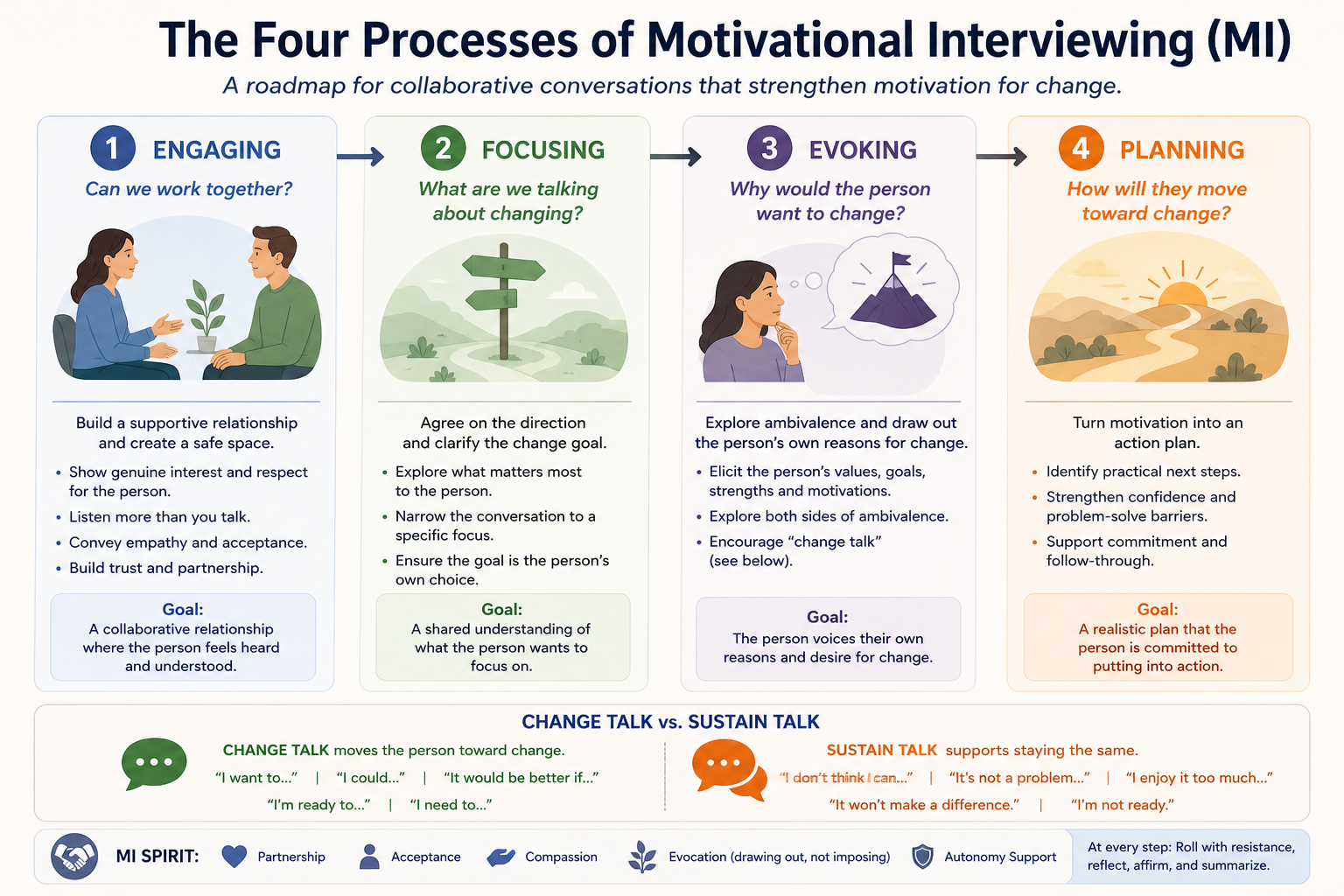
Motivational Interviewing (MI) is a collaborative, person-centered approach designed to strengthen an individual's own motivation and commitment to change. The approach originated in William R. Miller's work with people experiencing alcohol-related problems and was subsequently developed by Miller and Stephen Rollnick into a broader method for facilitating behavior change (Miller & Rollnick, 2023, p. 17).
MI is particularly concerned with ambivalence, the coexistence of reasons for and against changing a problematic behavior. Rather than attempting to persuade individuals to change, the approach seeks to create a conversational environment in which people can explore their own reasons, values, and goals for change. The practitioners therefore guide the conversation while respecting the individual's autonomy and avoiding confrontation or coercion.
After a series of discussions with Norwegian psychologists and social workers that were practicing working with alcohol use disorder, Miller and Rollnick noted guidelines on how to help individuals change their drinking habits:
- Change is a long-term process that evolves through personal interactions.
- Ambivalence is a normal experience when considering change.
- It is necessary for the client to consider changing.
- It is important for the client's own experience and perspective to be taken into consideration.
- The client should voice the reasons for change and not the therapist.
- It matters what the therapist chooses to ask, affirm, reflect upon and include when summarizing.
- The therapist should not push back when a client is resisting.
- The therapist fosters hope and optimism in a person's ability to change.
Motivational Interviewing promotes a collaborative partnership between practitioner and client, founded on compassion, acceptance, and respect for client autonomy. Rather than directing the client toward a predetermined solution, practitioners use communication strategies such as open-ended questions, affirmations, reflective listening, and summaries to explore the person's experiences and encourage the expression of their own reasons for change. Central to this process is evocation, through which practitioners draw out rather than impose the individual's motivations, values, and goals. MI has subsequently been applied across a wide range of health-related contexts, including substance use, weight management, smoking cessation, and chronic disease management (Rubak et al., 2005; Lundahl et al., 2013).
References
- Berne, E. (1975). What do you say after you say hello? The psychology of human destiny. Corgi.
- Cornelius, H., Faire, S., & Cornelius, E. (2007). Everyone can win: Responding to conflict constructively (2nd rev. & updated ed.). Simon & Schuster.
- Elliott, R., & Greenberg, L. (2016). Emotion-focused therapy. In The person-centred counselling and psychotherapy handbook: Origins, developments and current applications (p. 212).
- Gendlin, E. T. (2003). Focusing (Rev. & updated 25th anniversary ed.). Rider.
- Greenberg, L. S. (2015). Emotion-focused therapy: Coaching clients to work through their feelings (2nd ed.). American Psychological Association. https://doi.org/10.1037/14692-000
- Greenberg, L. S., & Goldman, R. N. (2007). Case formulation in emotion-focused therapy. In Handbook of psychotherapy case formulation (2nd ed., pp. 379–411).
- Hendricks, M. N. (2002). Focusing-oriented/experiential psychotherapy.
- Lundahl, B., Moleni, T., Burke, B. L., Butters, R., Tollefson, D., Butler, C., & Rollnick, S. (2013). Motivational interviewing in medical care settings: A systematic review and meta-analysis of randomized controlled trials. Patient Education and Counseling, 93(2), 157–168.
- Miller, W. R., & Rollnick, S. (2023). Motivational interviewing: Helping people change and grow (4th ed.). Guilford Press.
- Rubak, S., Sandbæk, A., Lauritzen, T., & Christensen, B. (2005). Motivational interviewing: A systematic review and meta-analysis. The British Journal of General Practice, 55(513), 305.